


- Empathy is the ability to see the world through your users’ eyes. Most organisations struggle with this.
- Emotional intelligence means actively managing how content makes people feel.
- Take the Runcible EI Test to see if your strategy is emotionally intelligent.
- Like it or not, everything you post gets decoded for empathy and intent.
- Winners embed emotional intelligence in workflow with user personas and lists of unmet needs.
- They also cultivate a consistent and attractive publication persona.
Empathy Isn’t Soft, It’s Strategic
The biggest challenge I face with the organisations is to get them to think about what their target audiences need, rather than what they wish to tell them. Making this mindshift is by far the most important step in audience development, but it’s surprisingly hard. The issue is that it’s a complication and requires thought. When time is at a premium, as it is for every communication team, empathy doesn’t get a look in.
Digital content strategies are measures of the emotional intelligence of the organisations behind them. Many organisations come across as transactional – they’ve got messages to get out and they do that as directly as possible. The beauty of that model is its simplicity. Its weakness is it tends not to resonate with its intended audiences.
In a content-saturated world, transactional messaging – “buy now,” “subscribe here,” “click to learn more” – is losing its power. People are exhausted by being pitched to. And the smart operators have recognised this. Think about the advertising you see online and on TV. Much of it doesn’t push product directly. It puts the audience’s needs, emotions and context first. It speaks to what people are feeling, not just what they might want to buy. Brands like Dove, Patagonia and Monzo have built lasting impact by creating content that connects before it converts.
This approach doesn’t mean being vague or indirect. It means building trust through emotional intelligence. That might be an ad that validates someone’s struggle, a subject line that anticipates doubt, or a story that makes someone feel seen. Empathetic content earns attention. It’s not a “nice-to-have” – it’s a strategic necessity in a landscape where attention is scarce and skepticism is high.
Everything posted gets decoded for empathy and intent
Everything you write has a tone of voice. Everything you produce has a kind of digital body language. Everyone who reads, watches or listens to your content consciously or subconsciously assesses the emotions you’re projecting and, crucially, your intent. Empathy means recognising these features of digital life but going further and offering things that might help deal with them by thinking hard about how you come across and what your audience might need from you.
It’s important to note that being empathetic may or may not require emotive content. If your audience needs straightforward information and/or answers, anything else will get in the way.
Human beings are hard-wired to analyse one another very, very quickly. It takes just seven seconds to make a first impression, according to one well-cited study. Something similar happens in digital media. Numerous studies suggest that those scrolling through social media feeds spend a couple of seconds or less to decide whether to scroll past.
The upshot of this is that if you want to use empathy, then a bare minimum is to think about making a good first impression – a social post, the opening frame of a video, and your article’s headline.
An example: How to analyse email subject lines for digital empathy
Not everyone uses social media, but nearly everyone uses email, so the inbox is a good place to start in our analysis of digital empathy. Here are three very different email ‘subject lines’. that worked for me. Each is successful for different reasons:
Unicef: Will you put this phone down to save a child’s life? (Fundraising for Tap Project)
Evernote: Stop wasting time on mindless work. (Promotion for app)
The Lancet: Explore our Dec 03, 2022 issue. (New content alert)
There’s no objective way of measuring empathy in these short strings of words – different people will react in different ways. But it’s worth thinking about three key questions in order to isolate the empathy factor:
- Editorial: Is it clear? Does it educate, inform or entertain?
- Emotional: Is there a trigger to provoke people’s interest?
- Empathy: Is it accessible? Does it help the target audience to do something?
Unicef scores on all three counts: Will you put this phone down to save a child’s life?
- Editorial: Simple, short and intriguing: elegantly teases game in which players forgo phones to donate money
- Emotion: Guilt trips via the promise of an extraordinary prize for a trivial act of self-sacrifice
- Empathy: Addresses me directly, references where I’m likely to be (on my phone), offers a shortcut to doing something positive
Evernote raises questions: Stop wasting time on mindless work
- Editorial: Confident command, which hints at, but does not promise, guide to time-saving with no downside
- Emotion: Intrigue plus taps into ‘loss aversion’ and the fear of missing out by wasting time
- Empathy: Opinion is divided here. Do I feel this is a sympathetic voice? Am I being told off? Where’s the positive?
The Lancet is purely functional: Explore our Dec 03, 2022 issue
- Editorial: Short, functional alert to the publication of a new issue. But no attempt to tease the topics covered.
- Emotion: Zero. No attempt to trigger intrigue, FOMO, urgency, celebration.
- Empathy: At first sight, there is none. But think about the audience – subscribers to the journal, and where they are – in their email inboxes where reading space is tight – and possibly their age (older, with worse than average eyesight?), and this super-functional subject line begins to look like it has thought hard about what its users need.
4 tactics for increasing the empathy of your communications
Ultimately, increasing empathy requires a shift in thinking for most individuals and organisations. The starting point for this is to put the audience first. That’s easy to say; much harder to do. Whether you’re writing a blog post, designing a newsletter, or drafting social copy, here are three ways to increase empathy—and why they work.
1. Develop an audience persona
Empathy begins when you stop thinking about what you want to say and start focusing instead on what your audience needs to hear. Creating a basic audience persona is the simplest way to make this shift.
This can be very, very simple. At the World Economic Forum, we devised a basic persona from the demographic data from Twitter, Instagram, and Facebook. The result: a college-educated woman, under 25, living in Dhaka, who volunteered for civil society groups, and was mostly on her mobile. Armed with this, producers dialled down the use of headlines using humour or cultural references, kept things much simpler, and thought much harder about what posts looked like on mobile phones.
That’s just a start. You need to go beyond demographic data and create a more detailed pen portrait of the audience member. Ask questions like these:
- How old are they?
- What is their role or job title?
- What kind of organisation do they work in?
- What goals are they trying to achieve?
- How is their success measured?
Example:
I’m trying to reach time-poor, mid-career communications professionals (comms leads, editors-in-chief, content managers) in media and mission-driven organisations trying to drive their audience engagement higher.
One you’ve established a persona, ask these five questions to get a deeper understanding of what drives their decision-making:
- What is your audience persona frustrated by?
- What needs are currently unmet?
- What internal tensions define them?
- What emotions might shape their choices?
- Where do they spend their time – and doing what?
Here’s the result based on my own, reasonably successful attempts to attract interest in consultancy:
What are they frustrated by?
Constant content demands, unclear priorities, noisy platforms, and the pressure to keep up with new tools and tactics.
What internal tension defines them?
They want to be strategic – but are stuck firefighting. They crave clarity but are overwhelmed by choice and change.
What needs are unmet?
- Quick, trusted guidance on what works and why
- Smart examples and formats they can adapt
- Tools and thinking that save time, and don’t add to workload
What emotions shape their decisions?
- Reassurance (‘Give me evidence this works for people like me’)
- Empowerment (‘Make me feel like I can actually do this)
- Curiosity (‘Kindle my interest in new ideas’)
- Fear of Missing Out ‘(‘Help me not get left behind’)
Where do they spend time – and doing what?
Mostly on mobile, in fragmented moments (commute, between meetings), checking social feeds, scanning emails.
Underlying all these: a desire to feel competent, credible, and in control.
In most cases, there will be more than one persona that you are trying to appeal to. This complicates things, but the basic principles are robust – create content with a real audience or audiences in mind.
2. Embed your persona in your decision-making
There are strong gravitational forces in all organisations that will knock you off course. One of the most prevalent is ‘messaging’ – the dominant model for communications and one in which it is all too easy for the desires of the organisation to trump the needs of the audience.
The best way of tackling this is to plumb user-first thinking into your workflow. There are several points in the lifecycle of a piece of content where this is most important:
Ideation: Make sure every content idea is rooted in user needs, not internal priorities.
- Use audience personas or empathy maps to test each idea: What problem does this solve? What emotion does it tap into?
- Review real user queries, FAQs, and search trends (Google Search Console, internal search, Reddit, etc.)
- Ask “So what?: If it only matters to the organisation, not the audience, drop it.
- Co-create ideas with your audience: Use surveys, polls, or past engagement data to shape themes.
Production: Make every piece easy to consume and emotionally relevant.
- Craft strong, specific hooks: Lead with user benefit, not organisational bragging.
- Write for mobile-first readers: Short paragraphs, subheadings, bullets, visuals.
- Use “you” more than “we”: Make the reader feel seen, not spoken at.
- Involve real users or stories: Highlight testimonials, frontline experiences, or case studies.
Promotion: Respect your audience’s time and context.
- Adapt message for each platform: Don’t cross-post—reframe headlines and visuals for the norms of LinkedIn, email, Instagram, etc.
- Put the benefit first in subject lines and hooks: Make opening or clicking feel worth it.
- Use emotionally intelligent scheduling: Avoid promotion overload, time content to their routines (e.g. commutes, Monday planning).
- Respond to comments and questions: Treat distribution as a two-way conversation.
Recycling: Extend content life by reshaping it around audience behaviour.
- Use performance data to guide remixing: Let user actions – not internal priorities – drive what gets repackaged.
- Turn long content into skimmable formats: Carousels, infographics, videos, quote cards.
- Update older pieces with new insights: Focus on what’s changed for the user, not the brand.
3. Refine your persona(s) based on observation
This is harder but equally vital. There are all sorts of signals you can pick up to sharpen your approach if you know where to look. Here are some introductory approaches:
Social media : Monitor interactions like a hawk to see which kinds of posts get the most interest
- Every social network automatically bubbles up suggestions for similar accounts. These suggestions are based on the overlap of followers. Have a look at these and see if you can see any patterns in the posts that are most engaging.
- Consider a specialist audience-listening tool that will offer greater insights. Audiense is one such provider and offers a free plan that will give basic information on the tastes of your twitter followers.
Search: There’s an entire industry devoted to exploiting Search, but these three tools will give you some important insights into your audience and its needs:
- Google Analytics will give you a guide to the demographics of your audience and some limited details of what brings them to the site
- Google Search Console provides more granular details of the queries that bring people to your site
- Answerthepublic allows you to enter a topic and find out the most common questions asked

Don’t forget to pay attention to your own persona
This is the mirror image of point 1 above. In the same way that you need a clear view of your target audience(s), you need to project a clear digital identity. And the best test of this is on social media where you are looking for people to share your content and follow you. So what makes you ‘followable’?
Consider what you do when a social media post intrigues you. You probably have a quick look at the user profile to see if this is your kind of account. To a certain degree, users are weighing the benefits from following one more account to the disbenefits of filling their stream with more content. To make this decision, you may be weighing the following factors:
- Activity: If it rarely posts, is it worth following? If it posts a lot, will it be irritating?
- Intent: Educate? Inform? Persuade? Entertain? Sell?
- Uniqueness: What can it do that my existing network can’t fulfil?
The most common mistakes made are:
- Limited posting, which suggests a lack of ideas and ‘interestingness’. Winners publish interesting posts regularly
- Self-obsession might work for celebrities, but for almost everyone else, it looks like the intent is self-aggrandisement, and that is going to limit the appeal
- Poor packaging: Dull images, poorly worded text, and ugly layout are all signals you don’t care about your content, so why should anyone waste time following or clicking through?
Who is doing this right?
Here are four very different organisations using variations on the empathy theme to get big engagement.
- Buzzfeed
Best known for its light-hearted ‘listicles, which turned it into a digital media powerhouse. But what started off as an unsubtle approach to triggering readers’ emotions has evolved into a far more sophisticated empathetic strategy.
Buzzfeed’s ‘Cultural Cartography’ now posits that when a reader or viewer chooses to use a piece of content it is effectively hiring the company to do a job for them. And they use this as a filter for ideas that need to do at least one of the following:
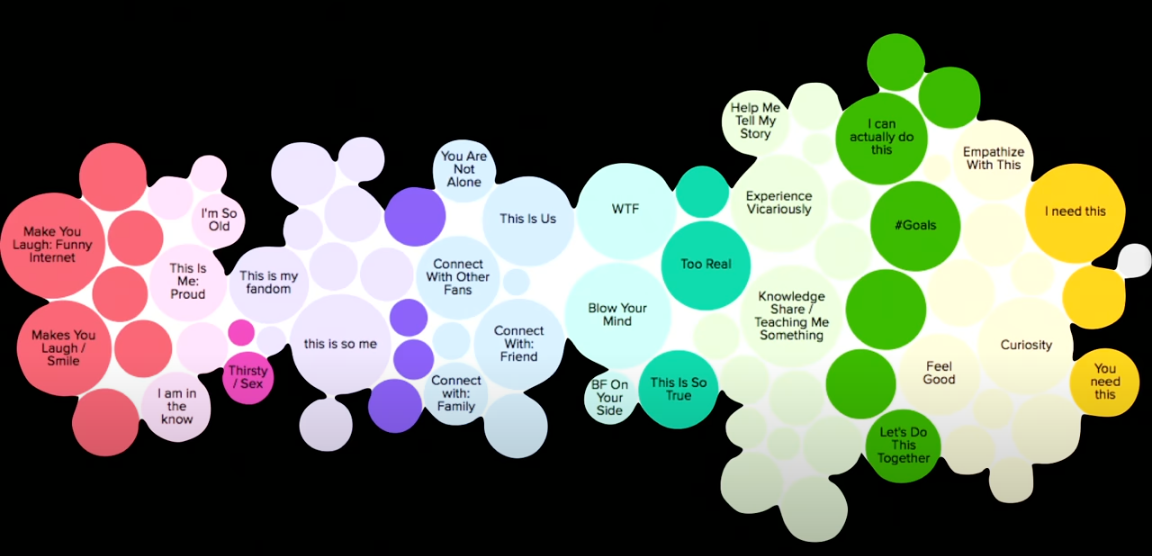
- Make me laugh
- Help me project my identity
- Help me connect
- Educate me
- Make me feel positive
- Show me what I need
- Axios
In five years, Axios built a business based on making news more accessible and sold for more than half a billion dollars. The business is based on ‘smart brevity’, which powers a range of services for commercial firms.
The empathy is focused on accessibility as can be seen in the six rules of smart brevity:
- Stop being selfish. Focus on your audience. Prioritize what they need, rather than what you want to say.
- Grab their attention. Pick the most important detail you want readers to remember. Sum it up in one sentence, then say it first – always.
- Write like a human. The words you’d say over coffee are the ones you should write. It’s way more engaging than jargon.
- Keep it simple. Subject-verb-object. Tight sentences and muscular words help readers see your point more quickly.
- Stay scannable. Studies show short paragraphs, bolding and bullets help pull people in – and get them farther, faster.
- Enough is enough. Use as few words as possible. The greatest gift that you can give yourselves – and others – is time.
3. Quartz
Quartz, aiming to be kind of digital-first Economist, has succeeded in part by recognising that content needs to appeal to the heart as well as the head. In a presentation aimed at advertisers, publisher Jay Lauf set out the topics that worked best:

4. World Economic Forum
This international Organisation turned itself into a major digital publisher in part by creating an audience-first production culture involving the following elements:
- Audience-first filter: Only ideas with a proposed headline, social copy, and image for social posts considered to help editors assess whether this is designed to help the audience or big up the author
- Sharing filter: A discussion about why this would be shareable and whether reframing could make it more shareable
- Workshopping final headlines and social copy for ‘relatability’.