

You put time into developing a great idea. You get one blog post, or one social media asset – and that’s it. But the smartest teams are doing something different.
Smart teams treat ideas like assets, not one-offs. They structure their content efforts around what I call content families. They adopt a ‘campaign mindset‘. And that changes everything.
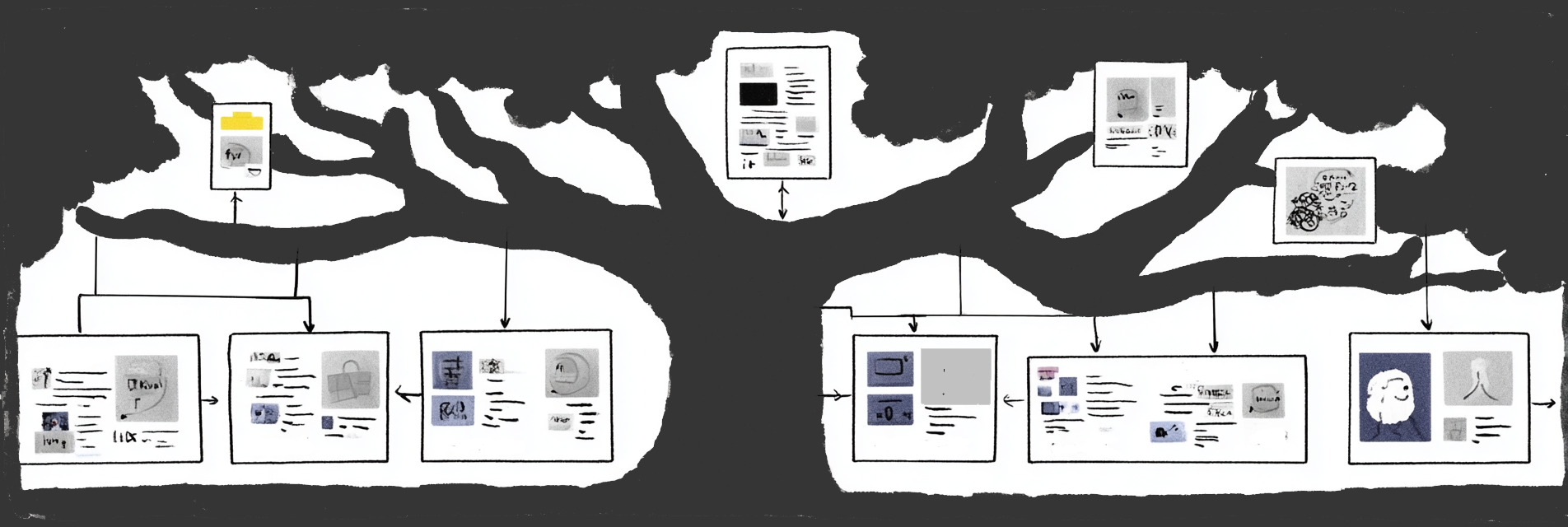
A content family is a group of related content pieces that grow from a single strong idea. Like a family tree, you start with a “parent” concept – a post, podcast episode, or research insight — and build “children” that explore different angles, formats, or audiences.
It’s how you turn one idea into a whole stream of joined-up, purposeful content – across blog, social, email, and more.
- Make every idea go further. One planning effort, multiple outputs.
- Create editorial consistency. Your content starts to feel more coherent and intentional.
- Increase visibility. You give your audience more chances to notice, engage, and respond.
- Build authority. You show depth, not just breadth — which helps with SEO and trust.
- Reduce the chaos. You know what to publish next — and why.
Here’s an example of how the World Economic Forum created a ‘Content Family’ on the 2021 Gender Gap Report.
- An Instagram ‘Story‘
- A social video in square and portrait formats for all social networks
- A series of accessible blogs, including this ‘League Table’ post on the website
- The full Report
The video links to the League Table post…

…So does the Instagram Story.

And the blog post links to the full report:

And this is how a Content Family maxes out on social engagement, search visibility, and funnelling traffic to the most valuable asset here – the full report.
Why Do Content Families Work?
There are three ideas behind ‘Content Families’:
- Good ideas are hard to find. For most organisations, developing story ideas with serious engagement potential is hard. We rejected about 75% of all ideas submitted at the World Economic Forum. But once you have an idea you think will work, doing as much with that story as possible makes sense.
- Different people prefer different formats. Some people are avid video viewers – think about the extraordinary success of things like TikTok and Instagram Reels, not to mention the huge amount of viewing done on the YouTube platform. Others prefer slideshows like Instagram Stories and carousels from LinkedIn and Twitter.
- Organisations need a digital centre of gravity. Google needs something to index to send you the right kind of traffic. Users need a place to get more details and learn more about you.
It is very easy for digital content to become fragmented and expensive to sustain. Content Families are a unifying concept that tackles these challenges head-on:
- Planning becomes simpler as the content family becomes the point of the exercise rather than individual platforms
- Search and Social have a tendency to get segregated, and content families stop this
- ROI: One of the biggest investments you make is identifying and researching promising stories. Content families ensure you make the most of that investment by squeezing the maximum social reach and google visibility from the idea.
How to Build a Content Family
Here’s a simple approach you can adapt to fit your workflow:
- Start with a strong core idea.
This is your “parent” – a piece that answers a key question your audience cares about. - List natural follow-ups.
These might include FAQs, use cases, summaries, formats for different channels, or counterpoints. - Choose your channels.
Think about where each “child” piece will live: blog, LinkedIn, email newsletter, carousel, podcast, etc. - Sequence and schedule.
Don’t dump them all at once. Stagger them to build momentum. - Track performance and loop back.
Use your best-performing “children” to inspire spin-offs of their own – or even a refreshed “parent.”